
Buying your first 3D printer can be confusing — there are simply too many options. There are budget printers, enclosed printers, multicolour machines, high-speed models, large-format printers and printers that require a lot of assembly. Almost every product claims to be easy to use or beginner-friendly.
But the best printer is not necessarily the most expensive or the one with the most features. The right choice depends on what you want to make, what materials you plan to use, the space you have available and how much time you are willing to spend on setup and troubleshooting.
This guide covers the key factors to consider before buying your first 3D printer.
Decide What You Want to Print
Before comparing specs, think about the type of projects you want to make. These might include:
- Decorative models and figurines
- Organisers and household items
- Phone stands and accessories
- Product prototypes
- Brackets and mechanical components
- Props and cosplay pieces
- Spare parts
- Custom products to sell
- Small miniatures with fine detail
The type of project will determine the technology, printer size and materials that suit you best. If your main goal is to produce organisers, brackets, prototypes or everyday functional parts, FDM is usually the most practical choice. If your priority is small miniatures with very smooth surfaces and fine detail, resin printing may be more suitable.
FDM or Resin: Which Is Better for Beginners?
The two most common technologies for home users are FDM and resin printing.
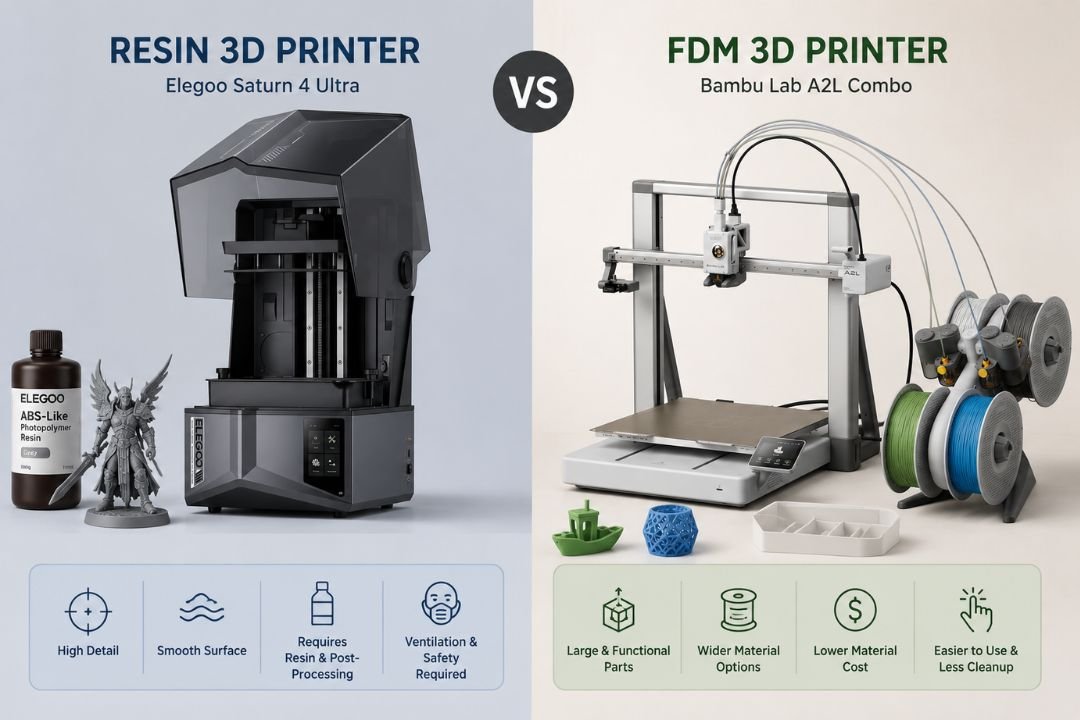
FDM 3D Printer
FDM works by heating and extruding filament through a nozzle. It is versatile across a wide range of projects, generally has lower material costs and is well-suited for large components and functional parts. Cleanup is straightforward, there is a wide selection of printers and filaments and minimal post-processing is required.
The downsides are that layer lines are usually visible, fine detail is not as sharp as resin and some surfaces may need sanding to achieve a very smooth finish.
Resin 3D Printer
Resin printers cure liquid resin using light. The advantages are excellent fine detail, smoother surfaces and results well-suited for miniatures, figurines and intricate models.
However, resin printing requires gloves, a suitable workspace, a washing and curing process, resin waste management and good ventilation. For most beginners who want to print everyday objects, prototypes and mechanical parts, FDM is generally easier and more versatile.
Determine Your Real Budget
Do not look at the printer price alone. Your startup costs may include the printer itself, filament, basic tools, shipping, spare parts, an extra build plate, nozzles, a filament dryer, an enclosure and electricity usage.
A very cheap printer may require more time for assembly, tuning and part replacement. A more expensive printer may already come with automatic features, good slicer profiles and a more user-friendly system.
The real value is not just the purchase price, but the total time, maintenance and additional accessories required.
Build Volume
Build volume is the maximum size of object the printer can produce. Common sizes for desktop printers are approximately:
- 180 × 180 × 180 mm
- 220 × 220 × 250 mm
- 256 × 256 × 256 mm
- 300 × 300 × 300 mm or larger
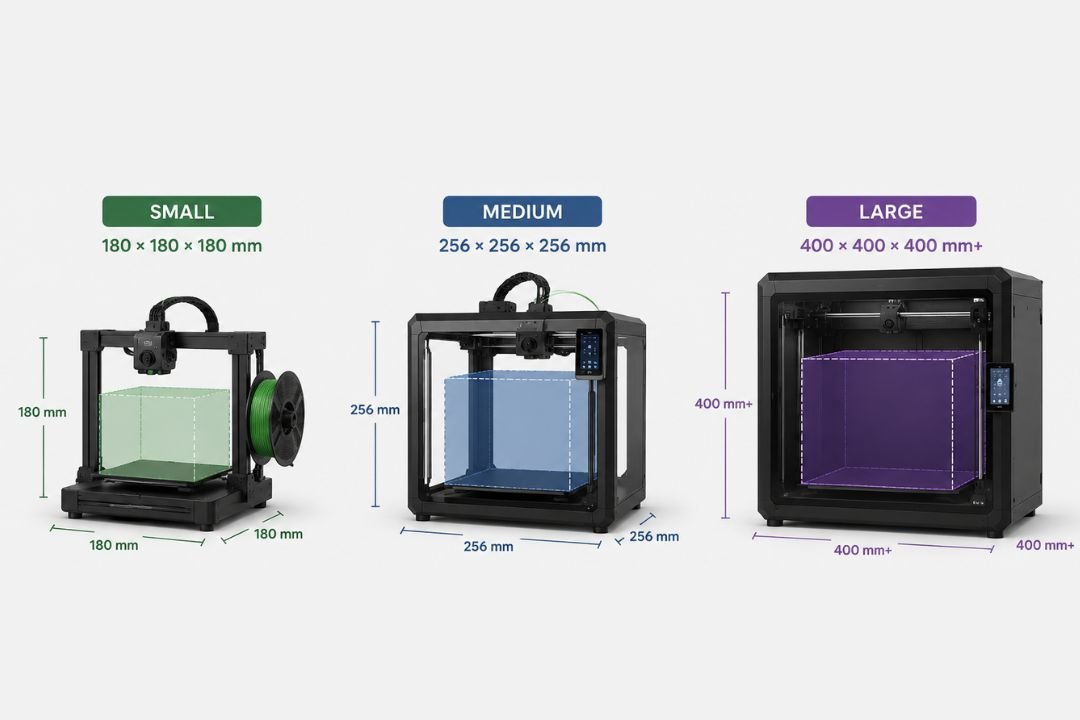
A large build volume looks appealing, but not every user needs it. For most projects such as organisers, brackets, phone stands and small prototypes, a build volume of around 220 to 256 mm is more than enough.
Larger printers require more space, use a larger build plate and can become harder to control at high speeds. Large prints also consume more filament, and a failed print wastes significantly more material.
Choose a size based on your actual projects, not because a large build volume seems like better value. Large objects can also be split into multiple parts and assembled after printing.
Bed Slinger or CoreXY?
The motion system design affects speed, stability and printer size.
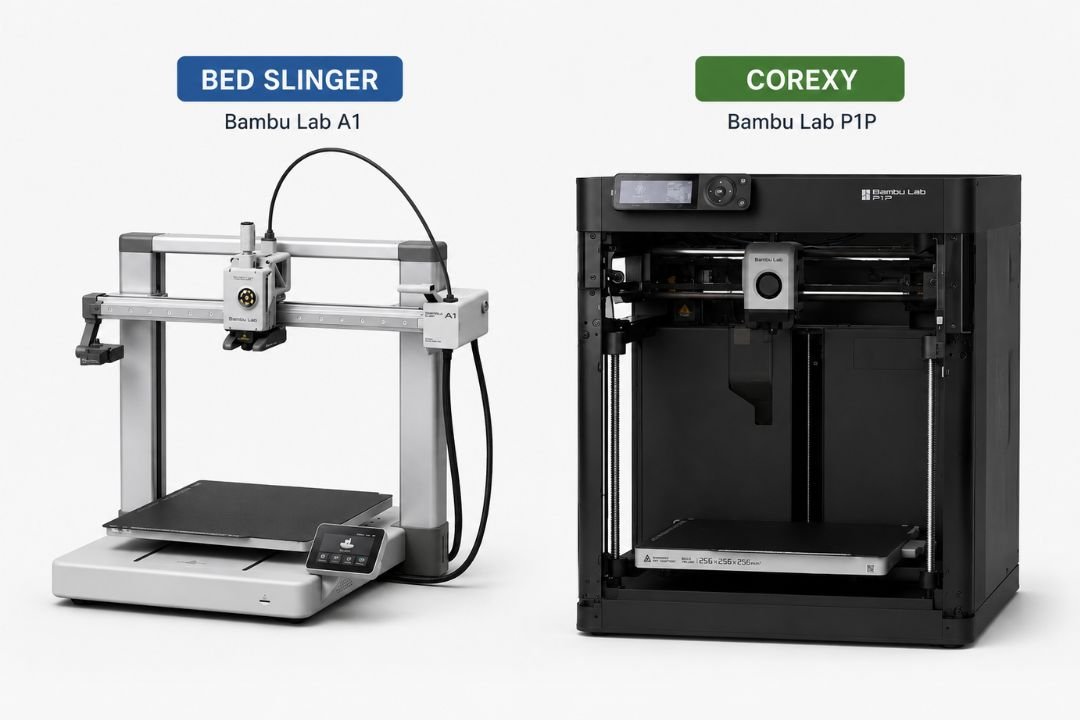
Bed Slinger
On a bed slinger printer, the build plate moves forwards and backwards. This design is typically simpler, cheaper, easier to maintain and available in many models, making it well-suited for beginners.
The downsides are that tall objects move along with the build plate, the printer needs extra space in front and behind, and it may be less stable at very high speeds.
CoreXY
On a CoreXY printer, the build plate usually moves vertically while the print head moves on the X and Y axes. This system is more stable for fast printing, better suited for tall objects and easier to build in an enclosed form.
However, the price is typically higher, the belt system is more complex and maintenance can be more involved.
A modern bed slinger is more than adequate for most beginners. CoreXY is more appropriate if you want high speeds, an enclosure or the ability to print engineering materials.
Open-Frame or Enclosed Printer?
An open-frame printer has no walls surrounding the print chamber, while an enclosed printer has panels around it.
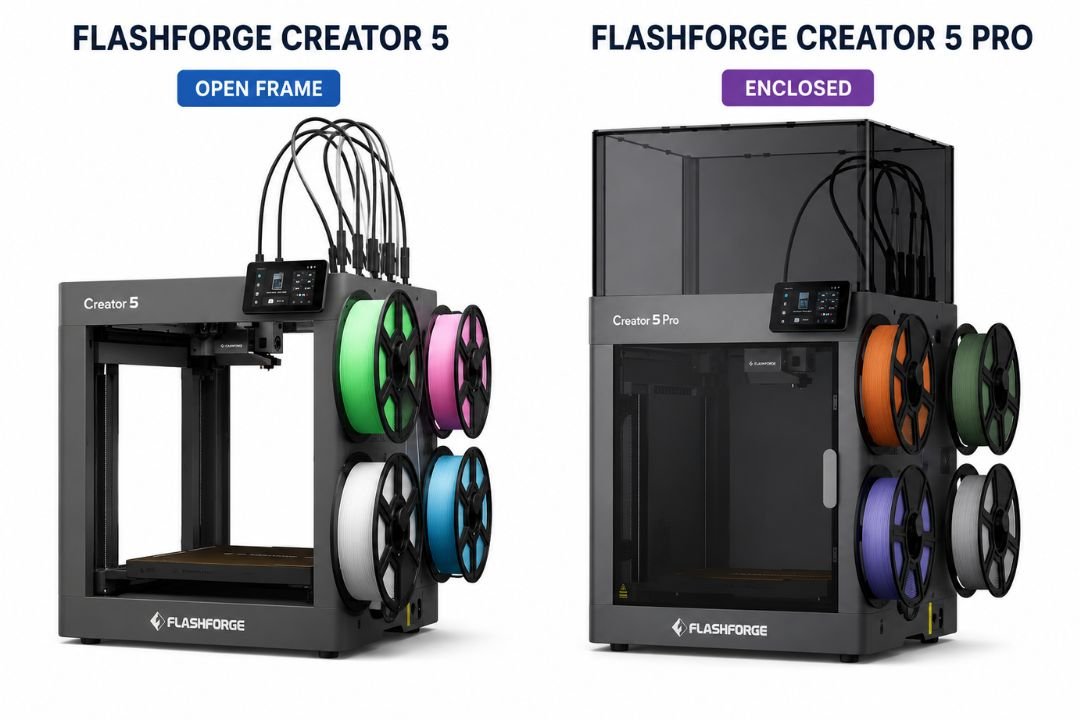
Open-frame printers are generally cheaper, easier to access, suitable for PLA and PETG and simpler to maintain. The downsides are that the print chamber temperature is less stable, they are less suitable for materials prone to warping and moving parts are more exposed.
Enclosed printers help maintain a stable temperature, are better suited for ABS, ASA and certain engineering materials, reduce the effect of drafts and offer additional protection from moving parts.
That said, enclosed printers are typically more expensive and larger. PLA may actually require the door or cover to be opened to prevent heat buildup. An enclosure also does not necessarily solve ventilation issues.
If you only plan to use PLA and PETG, an open-frame printer is sufficient. If you want to print ABS, ASA or engineering filaments, an enclosed printer is the better choice.
Looking to buy a 3D printer in Malaysia?
We’ve put together a curated list of 3D printing shops, filament suppliers, and service providers across Malaysia.
View the directory →Don’t miss the latest articles and guides
Get new Domechy articles, guides and free models straight to your inbox.

Wanna share your thoughts or request anything? Comment below.