
Toolchanger 3D printers are not a new concept. As early as 2021, Prusa had already introduced the Original Prusa XL, showing how multiple dedicated toolheads could make multi-color and multi-material printing faster and less wasteful.
However, 2026 feels different. More consumers are now demanding this technology because conventional single-nozzle multi-color systems can waste large amounts of filament and significantly increase print time.
Within the first half of the year alone, at least five toolchanger or automatic nozzle-changing platforms have launched, opened for orders, moved into reservation, or been announced by different manufacturers.
With both manufacturers and consumers moving in the same direction, the question worth asking is: is 2026 the year toolchanger 3D printers finally become mainstream?
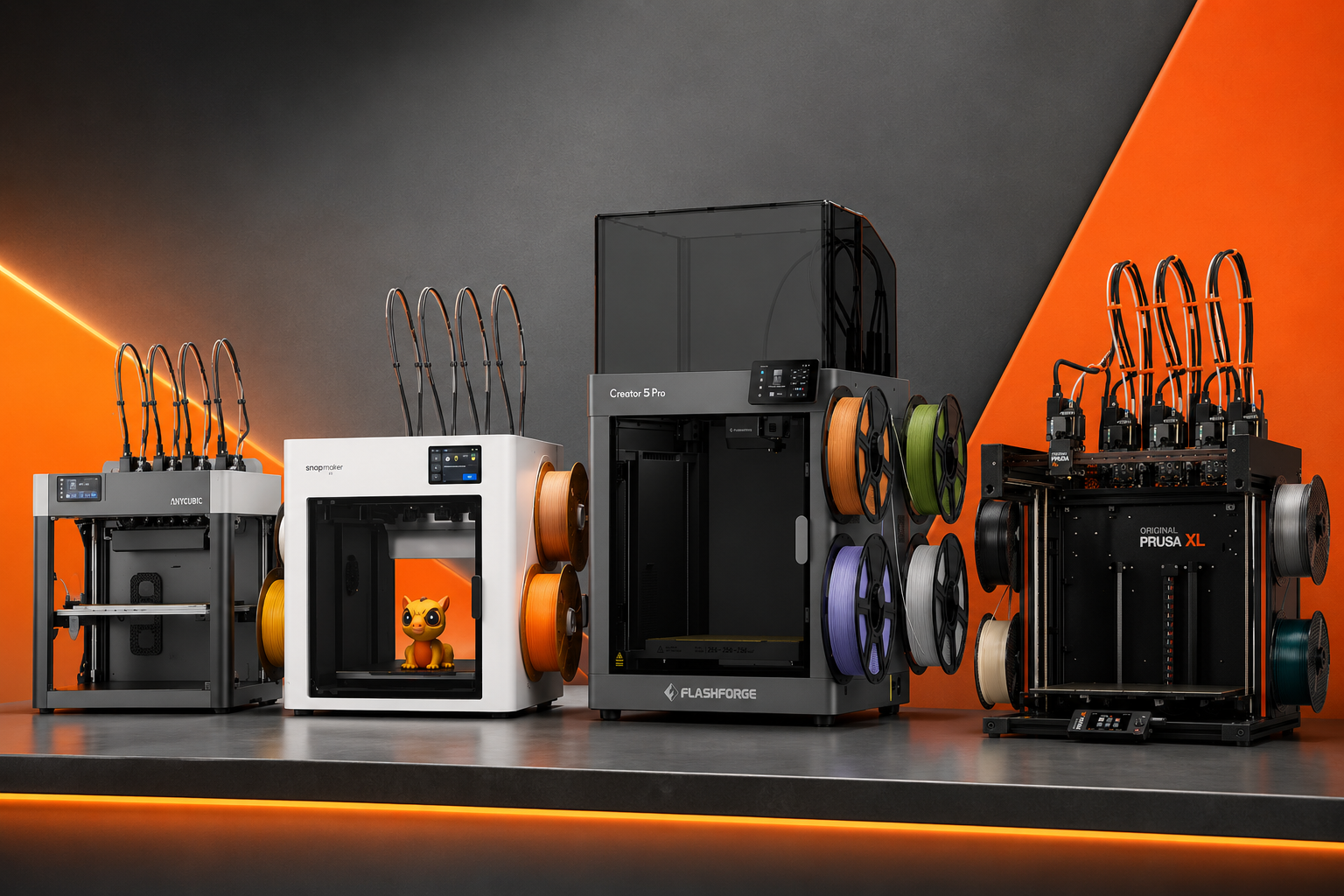
What Is a Toolchanger 3D Printer?
A toolchanger 3D printer can switch between different toolheads or nozzles during a print. Each tool can carry its own filament, nozzle size, or material, allowing the printer to change colors or materials without repeatedly unloading and reloading filament through a single hotend.
Compared with conventional multi-color systems, this can reduce purge waste and shorten material-change time. It also makes combinations such as rigid filament with TPU, soluble supports, or different nozzle sizes more practical.
However, not every machine uses the same mechanism. Some printers, such as the Prusa XL and Snapmaker U1, swap complete printheads. Others, including Bambu Lab’s Vortek and Creality’s KliTek, exchange smaller hotend or nozzle assemblies.
The basic objective remains similar: keep each material inside its own dedicated printing path and avoid repeatedly flushing one nozzle whenever the material changes.
Toolchangers also introduce more complexity. They require accurate tool alignment, reliable docking, good slicer support, and consistent calibration between every nozzle.
From the Prusa XL to the Toolchanger Boom
The Original Prusa XL was first revealed in November 2021 with support for up to five independent toolheads. It later began shipping in 2023 and became one of the most widely recognised desktop toolchanger printers.
For several years, however, it remained a relatively expensive and unusual product. Most consumer brands continued developing filament-switching systems that fed multiple colors through one or two nozzles.
The situation began changing quickly in 2025. Snapmaker introduced the four-toolhead U1, Bambu Lab revealed the H2C with its Vortek hotend-changing system, and Prusa partnered with Bondtech to introduce INDX for the CORE One platform.
By the first half of 2026, even more brands were entering the same race. Toolchanging was no longer limited to one expensive printer. It had become one of the main areas of competition in consumer 3D printing.
Toolchanger 3D Printers Shaping 2026
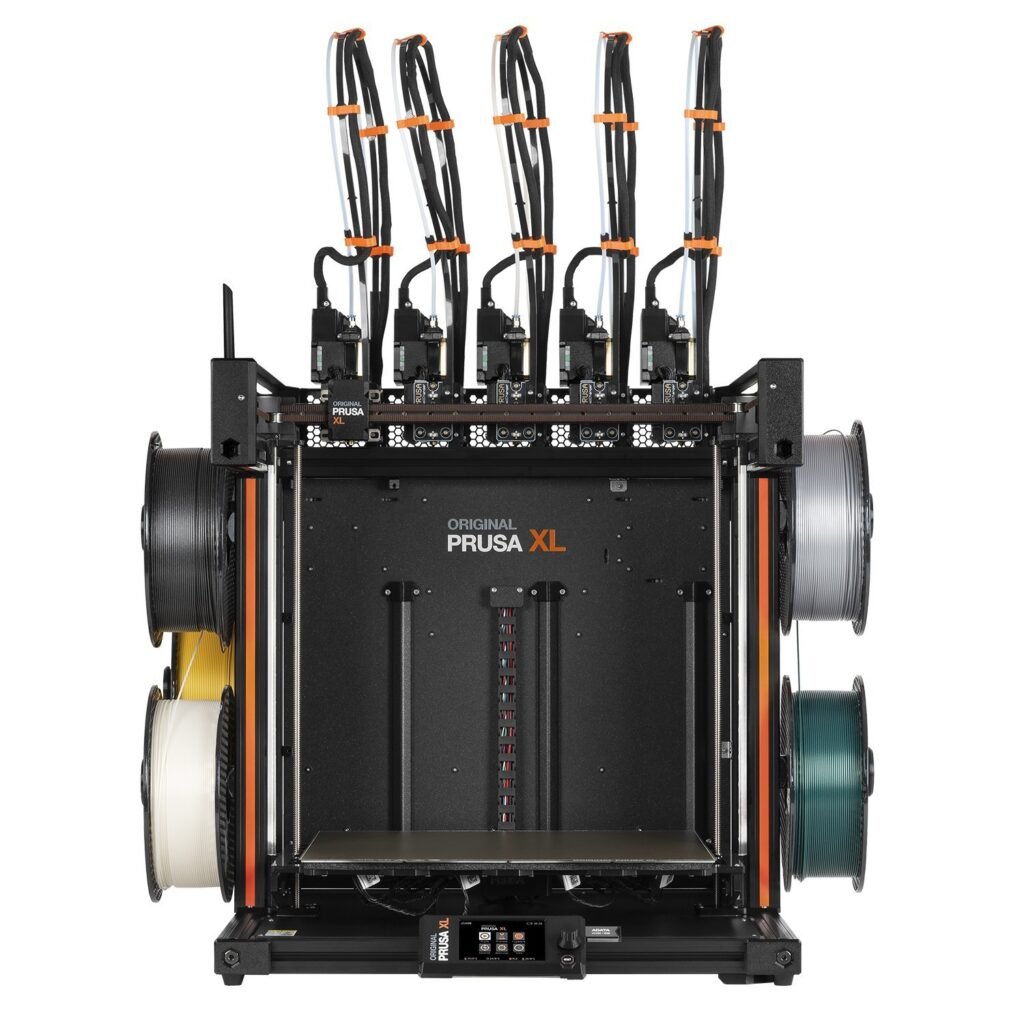
Original Prusa XL
The Original Prusa XL remains the main reference point for modern desktop toolchangers. Its active toolchanger can carry up to five complete printheads, with each tool containing its own extruder, hotend, and nozzle.
Because every material remains inside a dedicated printhead, the XL can combine different colors, support materials, and nozzle sizes with very little purging. The tools can also remain heated while parked, reducing waiting time between changes.
Its main advantage is maturity. The XL has been in use for several years, giving Prusa more time to improve firmware, slicer integration, and tool-changing reliability.
However, the five-toolhead version remains expensive compared with newer consumer-focused competitors. The XL represents the established premium benchmark rather than the most accessible entry into toolchanging.
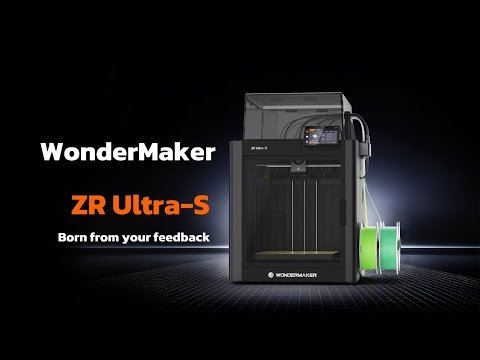
WonderMaker ZR Ultra-S
The WonderMaker ZR Ultra-S is a four-toolhead CoreXY printer developed around faster multi-color and multi-material printing with minimal purge waste. It offers a 300 x 270 x 290 mm build volume and is promoted as an open-source platform.
Its main specialty is affordability compared with earlier full-toolhead systems. WonderMaker is attempting to provide four dedicated printheads without moving into the much higher price range associated with machines such as the Prusa XL.
However, the ZR Ultra-S remains a crowdfunding product rather than an established retail platform. Its real-world reliability, production quality, and long-term support will need to be evaluated once more units reach customers.
Snapmaker U1
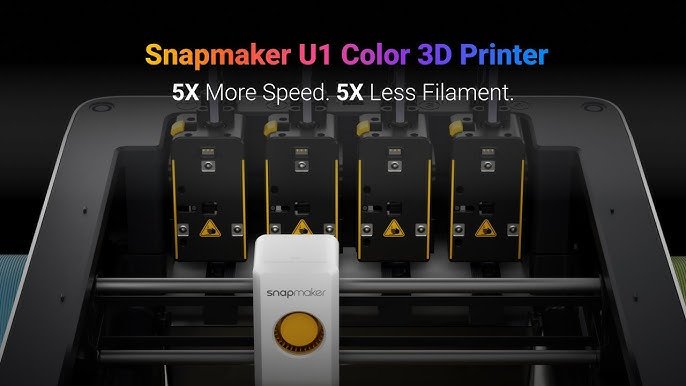
The Snapmaker U1 helped bring toolchanging into the wider consumer conversation. It uses four complete SnapSwap toolheads, with each filament remaining inside its own preloaded and preheated printing path.
Snapmaker claims that a tool change takes around five seconds. Since the printer does not need to unload one material, load another, and purge the remaining filament from the nozzle, multi-color prints can require considerably less time and material.
Its main specialty is accessibility. The U1 was designed as a relatively affordable and straightforward consumer product rather than an advanced machine requiring heavy configuration.
The U1 is also beginning to develop into a larger ecosystem, with hardened hotends, RFID-enabled filament, and an optional top cover with air circulation and filtration. This shows that toolchanger printers are starting to receive the same accessory support as more conventional consumer machines.
Bambu Lab H2C with Vortek
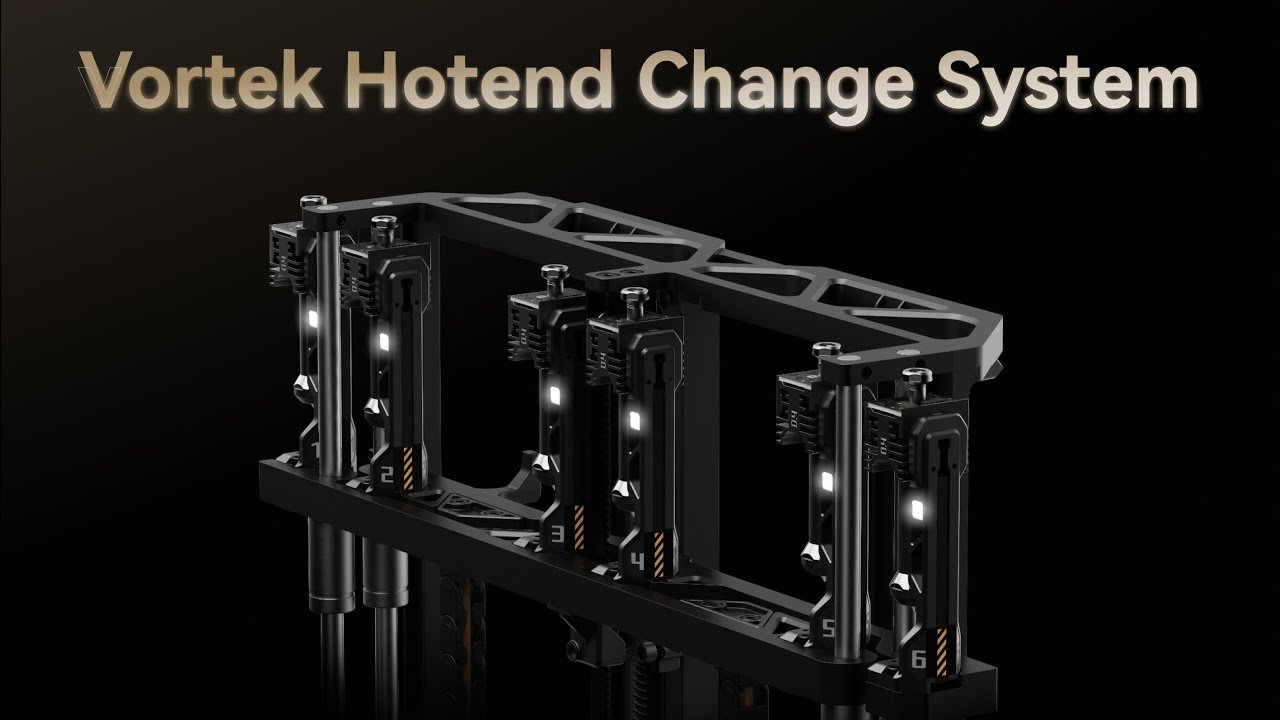
The Bambu Lab H2C approaches the problem differently. Instead of collecting a complete extruder and printhead for every material, its Vortek system automatically swaps dedicated hotends.
The H2C supports seven smart-swapping hotends and can work with additional filament supplied through Bambu Lab’s AMS ecosystem. Each frequently used material can have its own hotend, greatly reducing the amount of filament that must be purged during a change.
Its main specialty is automation. Bambu Lab has focused on integrating hotend changing with automatic calibration, filament management, Bambu Studio, and its existing printer ecosystem.
This may make the system easier for typical users, although it also means that much of the experience remains tied to Bambu Lab’s hardware and software. For many consumers, ease of use and consistent results may matter more than whether the system is open or closed.
Prusa CORE One INDX
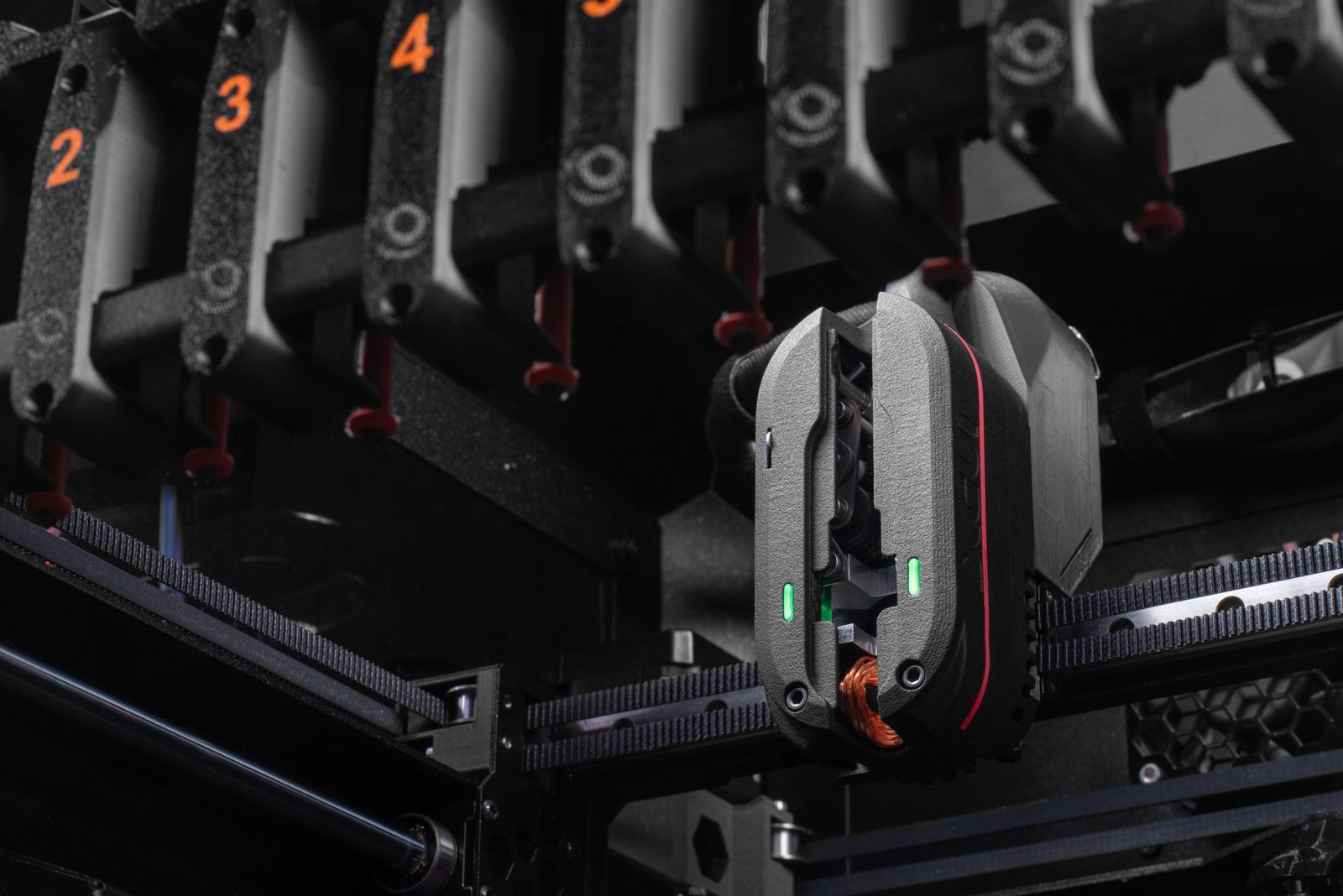
INDX is a collaboration between Prusa Research and Bondtech that adds toolchanging to the CORE One and CORE One+ platform. It can support up to eight compact tools, with each material receiving its own nozzle and filament path.
Unlike the larger active printheads on the Prusa XL, INDX uses smaller passive tools. The active extruder remains on the printer while collecting the required nozzle assembly. Induction heating then brings the selected tool to temperature.
Its main specialty is density. Prusa and Bondtech are fitting as many as eight material paths into a relatively compact enclosed printer, without requiring a large external filament rewinding mechanism.
The system can also combine rigid and flexible materials, soluble supports, and different nozzle sizes. Orders are now open, but INDX is only beginning to ship, so its long-term performance still needs to be proven by regular users.
AtomForm Palette 300
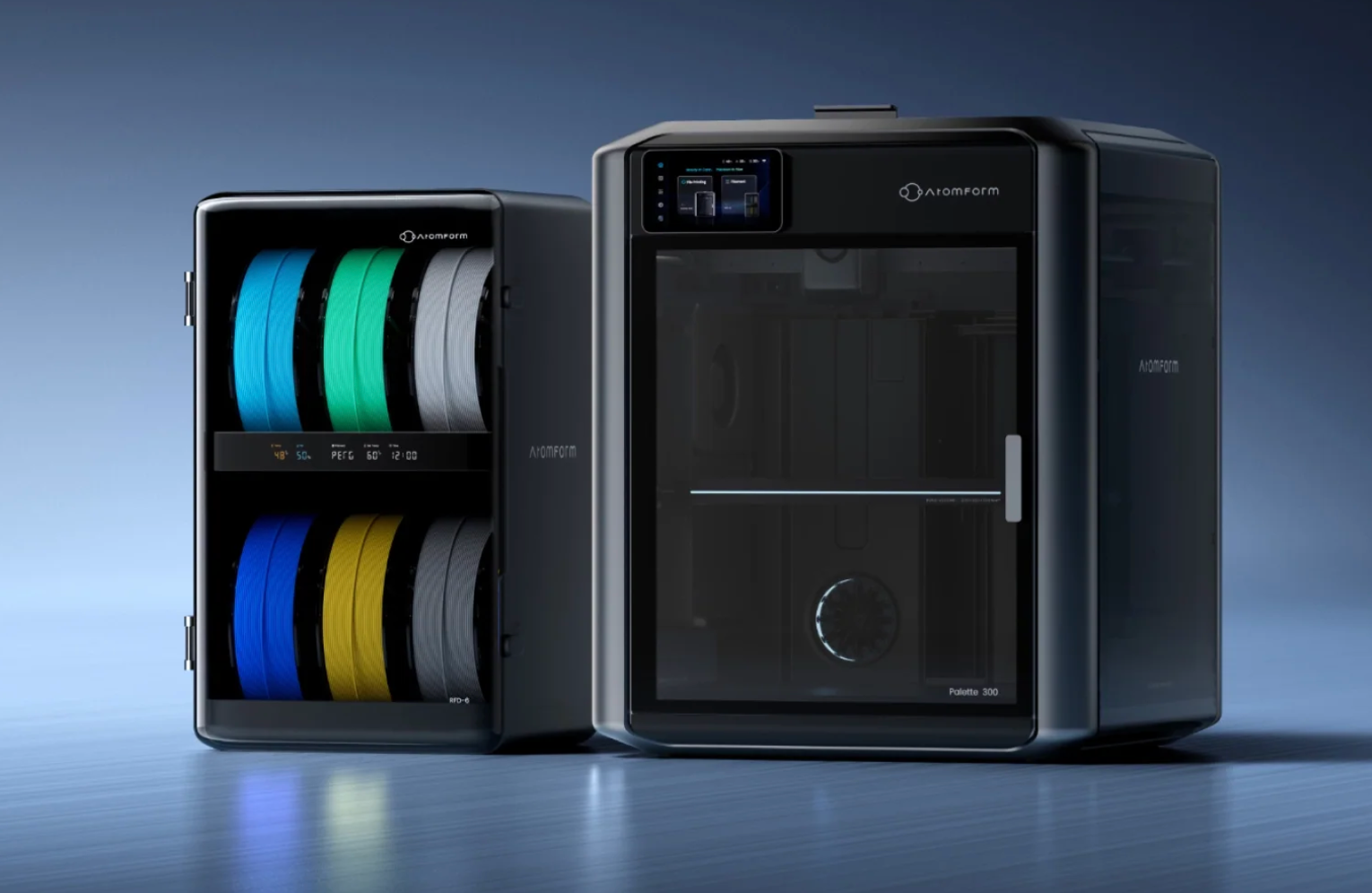
The AtomForm Palette 300 takes one of the most ambitious approaches in this group. Instead of four or five tools, it stores up to 12 automatically swappable nozzles.
AtomForm claims the printer can combine as many as 12 materials and 36 colors in one print. It is paired with a six-spool drying and feeding system, allowing more colors to be supplied than the number of spools held at one time.
Its main specialty is scale. Most current consumer toolchangers focus on four or five materials, while the Palette 300 is targeting significantly more combinations.
That ambition also raises questions about calibration, maintenance, and software management. The Palette 300 remains in the reservation stage, so its reliability and user experience have not yet been established through widespread independent testing.
Flashforge Creator 5 and Creator 5 Pro
The Flashforge Creator 5 series uses four independent FlashSwap toolheads. Each color or material remains loaded in its own nozzle, allowing the printer to change tools without the long purge cycle used by conventional single-nozzle systems.
Both models offer a 256 x 256 x 256 mm build volume and automatic multi-toolhead calibration. The Creator 5 Pro adds a fully enclosed frame, an actively heated chamber of up to 65°C, and air filtration.
The main advantage of the Creator 5 is its price-to-feature position. Flashforge is bringing four independent toolheads into a compact machine priced much lower than the earlier premium toolchanger category.
The standard Creator 5 appears suited to normal multi-color and mixed-material printing, while the Pro version is more relevant to engineering materials such as ABS, ASA, PC, and reinforced filaments.
However, this is still a new generation. Flashforge’s automatic calibration, tool docking, and slicer experience will need to remain consistent over long-term use before the Creator 5 can be considered as proven as older platforms.
Makertech ProForge 5
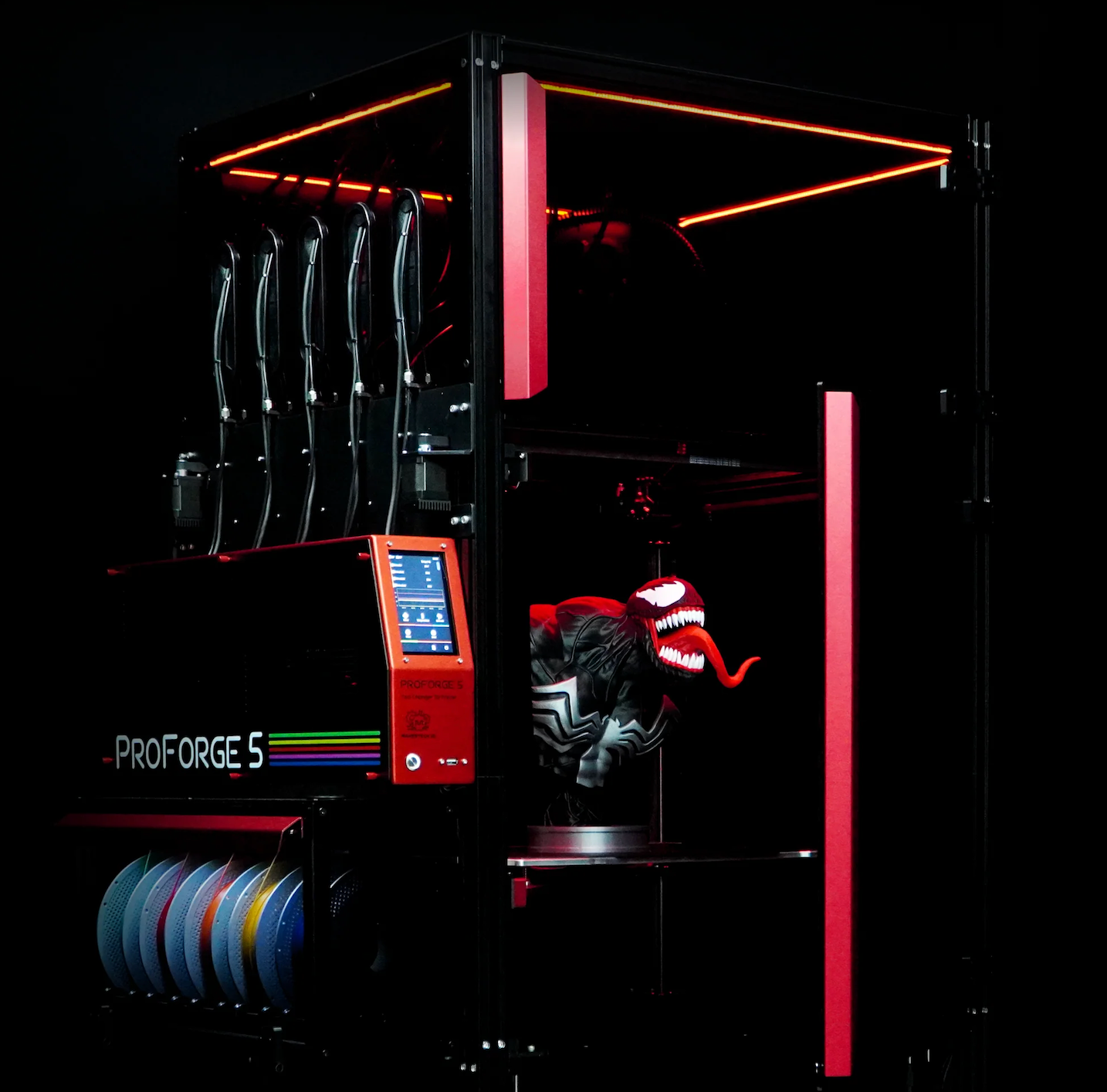
The ProForge 5 uses a traditional full-toolhead system and can be configured with up to five independent printheads. Each tool carries its own extruder, hotend, and filament.
Makertech offers several configurations, including a ProForge 5 Ultra package with five printheads, an enclosure, and individual filament dry boxes.
Its main specialty is flexibility for advanced users. Separate printheads allow different materials and nozzle sizes to be combined, while the machine’s large build area makes it more suitable for complex prototypes and functional components.
The ProForge 5 is less focused on being a simple household appliance. It is larger, more expensive, and likely more suited to experienced makers, workshops, and professional users who value customisation.
Unlike several newer announcements, the ProForge 5 is currently available to order. Its market reach, however, remains much smaller than printers from brands such as Bambu Lab, Creality, Prusa, or Flashforge.
Sovol M1D
The Sovol M1D is unusual because it combines a toolchanger with an IDEX motion system. One carriage uses a fixed extruder, while the other can collect different toolheads.
This allows the printer to support up to seven colors or materials while retaining the copy and mirror modes normally associated with independent dual-extruder printers. Sovol also claims that its metal auto-grip mechanism can complete a toolhead swap in around five seconds.
The hybrid design is the M1D’s main specialty. It is not only designed for colorful models, but also for small-scale production where two identical or mirrored parts can be printed simultaneously.
The printer is expected to use Klipper and OrcaSlicer-based software. However, it remains in the reservation and crowdfunding preparation stage. Its final production quality, shipping schedule, and long-term tool alignment are still unknown.
Creality K3 with KliTek
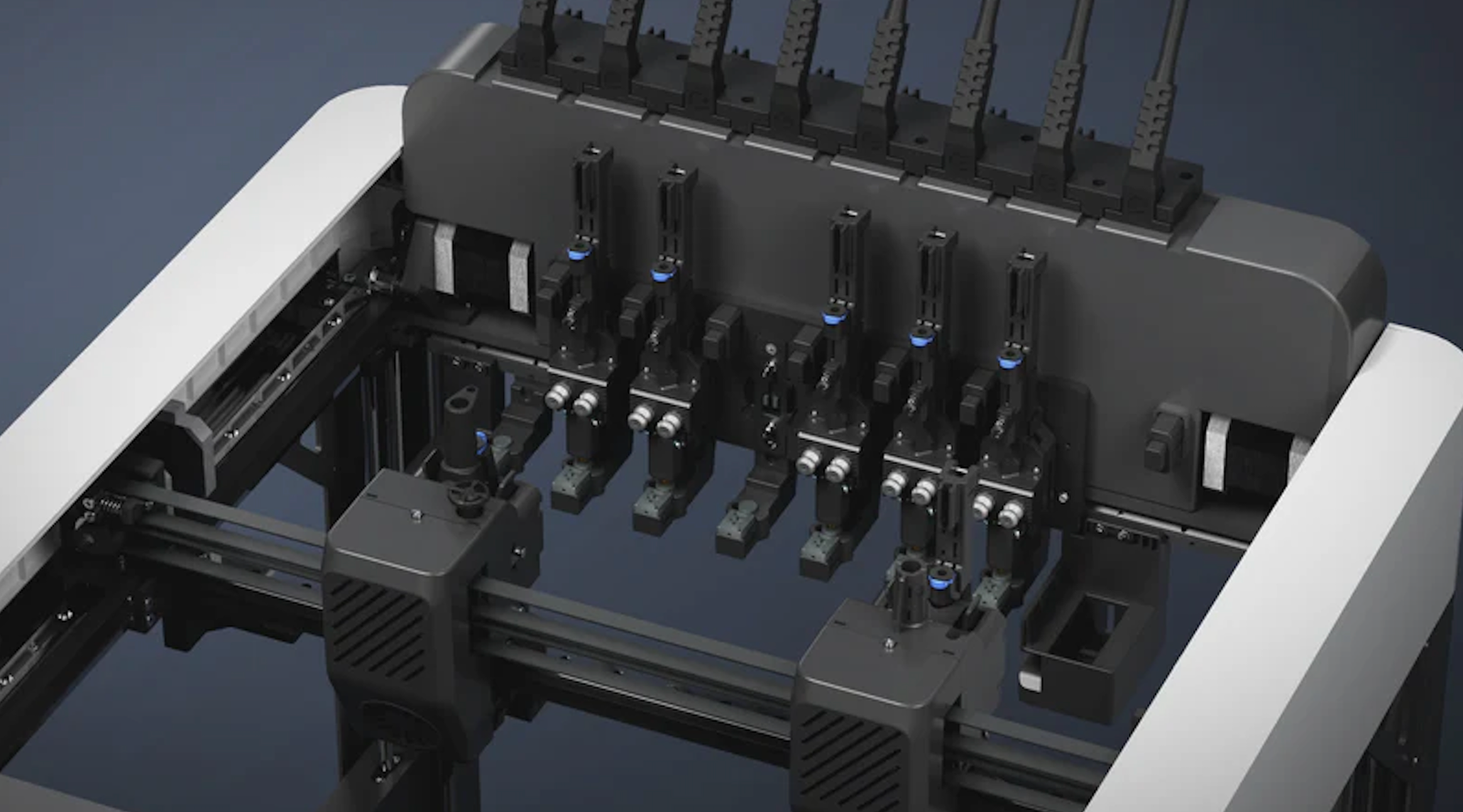
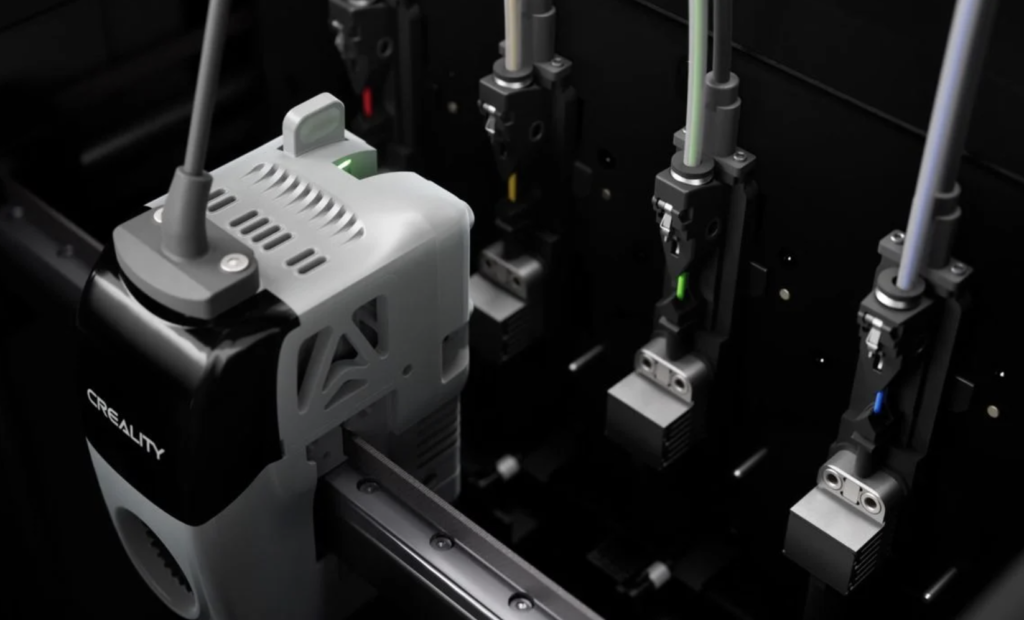
Creality’s upcoming K3 series will introduce the KliTek nozzle-changing system. Instead of collecting a complete printhead, the machine exchanges compact nozzle assemblies with dedicated filament paths.
Creality claims nozzle changes below five seconds and color or material changes below 15 seconds. The company is also promoting minimal purge waste and lower hotend replacement costs compared with replacing larger toolhead assemblies.
Its most interesting specialty may be flexible filament. Creality’s S-Drive feeding system is designed to push and pull soft filament through the material path, with claimed support for TPU as soft as 80A.
KliTek is also designed to support different nozzle sizes within one job. A printer could theoretically use a smaller nozzle for detailed outer walls and a larger nozzle for faster infill.
The technology is planned for the upcoming K3 series, but final price, complete specifications, and independent performance data remain unavailable.
Why Toolchangers Are Gaining Attention
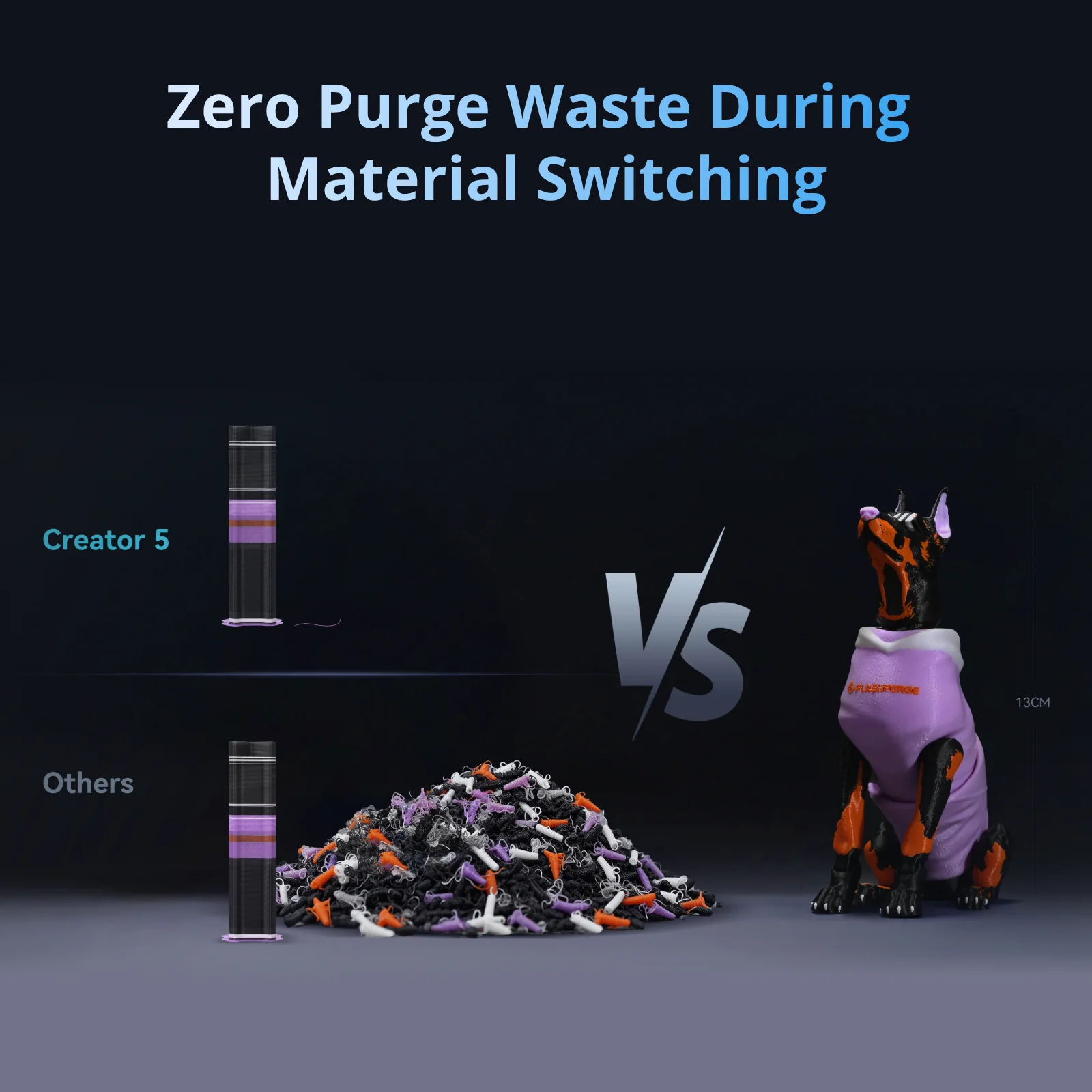
The biggest advantages are straightforward: less purge waste, shorter material-change times, better compatibility with flexible and support materials, and the possibility of using different nozzle sizes in one print.
Single-nozzle multi-color systems helped make colorful printing accessible, but they also made users more aware of how much time and filament is consumed during frequent material changes.
Toolchangers provide a more direct solution by keeping different materials ready inside separate tools. Instead of repeatedly unloading, loading, and flushing one nozzle, the printer physically selects another prepared tool.
Consumer expectations have shifted quickly. Whenever a major manufacturer teases a new flagship machine, many users now immediately expect some form of toolchanging or nozzle-changing technology. When the final product turns out to use a conventional filament-switching system, disappointment is often visible in creator coverage and community discussions.
This does not mean every new printer needs a toolchanger. A reliable and affordable single-material printer can still be the better choice for many users. However, it shows how quickly the technology has moved from a niche engineering feature to something consumers increasingly expect from premium multi-material machines.
Toolchangers Still Have Their Own Challenges
Reducing purge waste does not automatically make a printer better in every area. Toolchanging introduces additional mechanical parts, docking points, electrical contacts, and calibration requirements.
Even a small offset between two nozzles can create visible defects or poor dimensional accuracy. Parked nozzles must also be controlled carefully to prevent oozing onto the model.
More tools can increase the machine’s size, price, and maintenance requirements. Replacement hotends may also be more expensive or specific to one manufacturer.
Slicer support is equally important. A technically capable printer will still be frustrating if assigning materials, controlling tool temperatures, and adjusting purge or priming behaviour is difficult.
For this reason, the best toolchanger may not necessarily be the machine with the largest number of tools. Reliability, automatic calibration, software quality, and spare-part support may matter more than the headline specification.
Toolchanger Systems at a Glance
| Printer | Changing System | Max Tools | Main Specialty | Status (June 2026) |
|---|---|---|---|---|
| Original Prusa XL | Complete active toolheads | 5 | Established desktop toolchanger | Available |
| WonderMaker ZR Ultra-S | Complete toolheads | 4 | Lower-cost open-source approach | Crowdfunding stage |
| Snapmaker U1 | Complete toolheads | 4 | Accessible consumer toolchanger | Available |
| Bambu Lab H2C | Vortek hotend changing | 7 hotends | Automated Bambu ecosystem | Available |
| Prusa CORE One INDX | Compact passive tools | Up to 8 | High material count in a compact printer | Orders open, early shipping |
| AtomForm Palette 300 | Automatic nozzle changing | 12 | Highest nozzle and material capacity | Reservation stage |
| Flashforge Creator 5 Series | Complete toolheads | 4 | Competitive entry price | Available |
| Makertech ProForge 5 | Complete toolheads | 5 | Large format and customisation | Available to order |
| Sovol M1D | Toolchanger combined with IDEX | Up to 7 | Toolchanging with copy and mirror modes | Reservation and pre-crowdfunding |
| Creality K3 with KliTek | Compact nozzle changing | Not confirmed | TPU handling and mixed nozzle sizes | Announced for 2026 |
So, Is 2026 the Year of the Toolchanger?
Probably, but with an important qualification.
2026 appears to be the year toolchangers entered the mainstream conversation. Multiple brands are now competing to reduce purge waste, shorten material changes, and make multi-material printing more practical for regular users.
However, toolchangers have not yet become the default. Most of the new systems are still relatively new, unreleased, or only beginning to reach customers. Long-term reliability cannot yet be judged the same way it can for older, more established printer generations.
Their success will depend on reliable docking, accurate nozzle alignment, good slicer support, affordable spare parts, and whether the promised time and filament savings hold up during normal everyday use.
The number of tools alone will not determine the winner. A well-integrated four-tool system may ultimately be more useful than a more ambitious machine with eight or twelve tools if the simpler printer is easier to calibrate and more consistent to run.
For now, 2026 may be remembered as the year toolchangers stopped being a niche idea and became one of the main directions of consumer 3D printing.
Looking to buy a 3D printer in Malaysia?
We’ve put together a curated list of 3D printing shops, filament suppliers, and service providers across Malaysia.
View the directory →Don’t miss the latest articles and guides
Get new Domechy articles, guides and free models straight to your inbox.

Wanna share your thoughts or request anything? Comment below.