
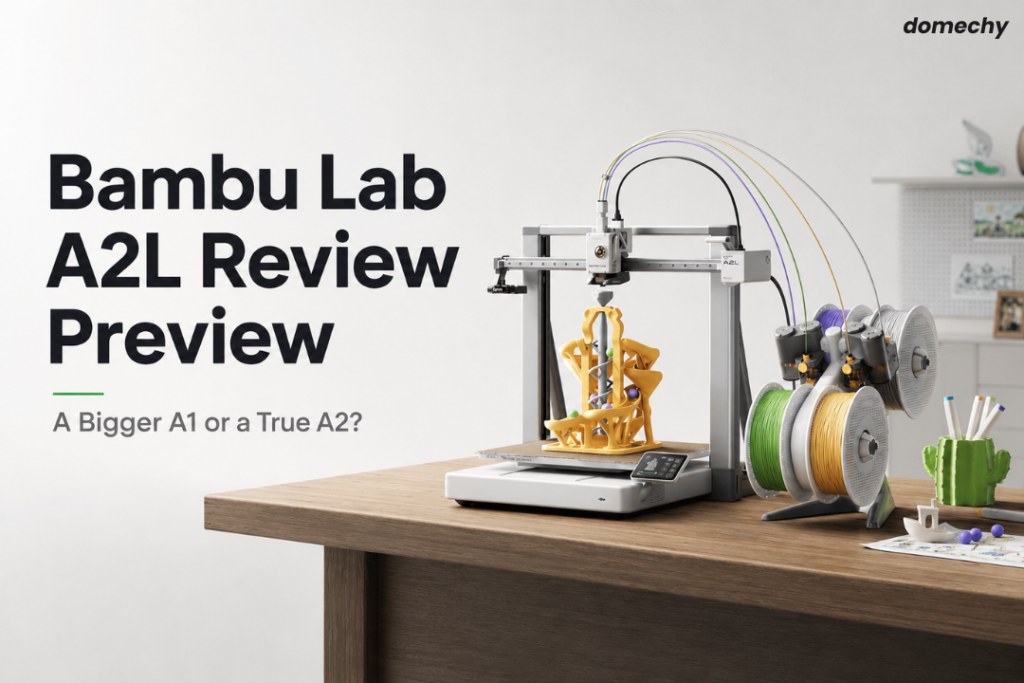

Bambu Lab A2L vs A1: What Changed and Is It Worth It
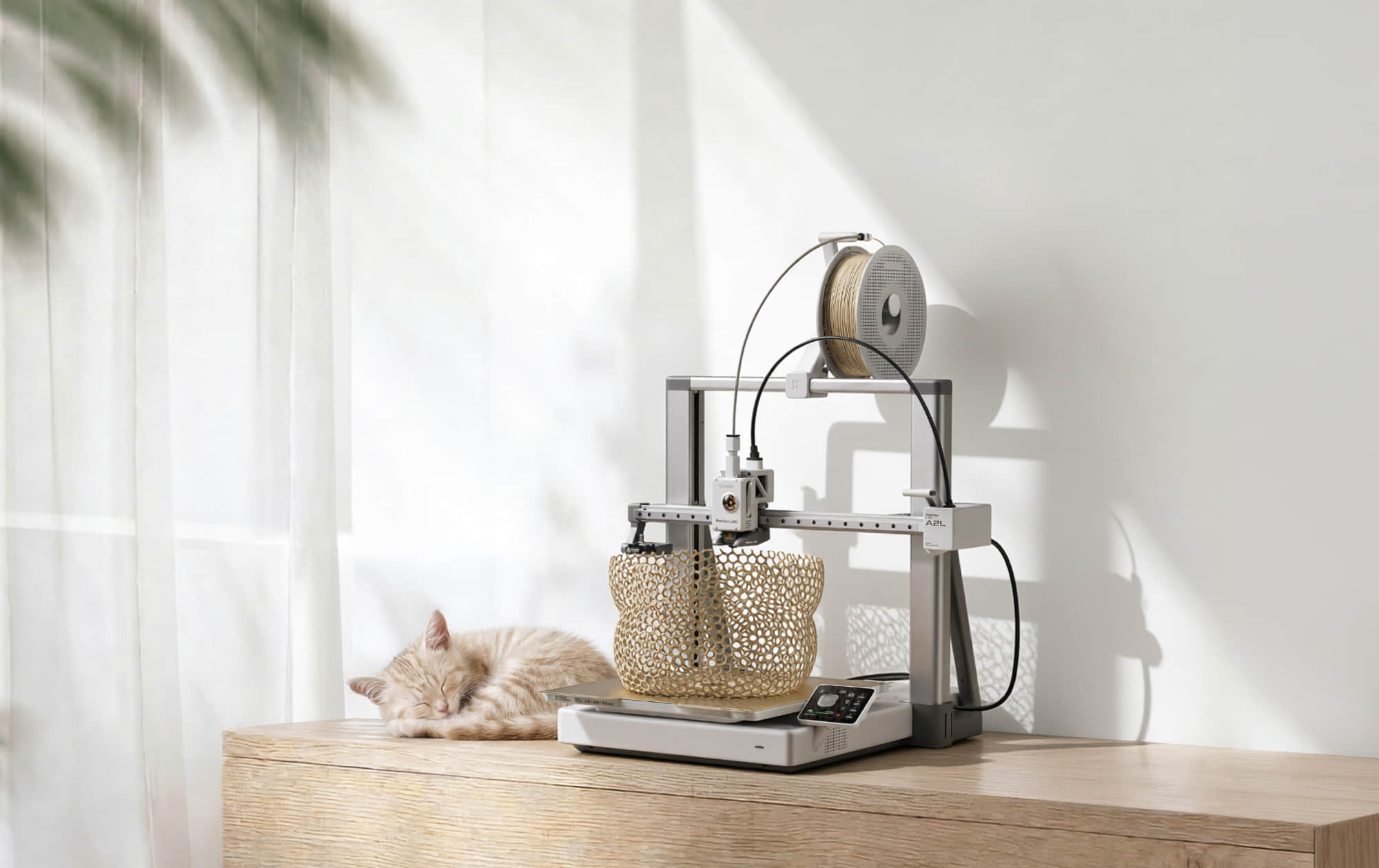
Bambu Lab has officially released the A2L, and honestly, this is one of those printers where I think the reaction will be quite split.
For normal hobbyists, I think many people will be happy with it, but for the more technical 3D printing community, I don’t think this printer will feel that exciting.
Before I continue, I want to be clear. This is not my full review yet. Bambu Lab has agreed to send me the A2L, so I will be able to test it myself soon. For now, this article is based on the official specs and early reviews that are already available online.
It Is Basically The Large A-Series Printer People Asked For
The biggest point of the A2L is obvious. It is big.
The build volume is 330 × 320 × 325 mm. That is much larger than the A1 and A1 Mini, and it puts the A2L into a more serious large-format category. For people who print cosplay parts, helmets, props, larger functional parts, or just want to print more objects in one batch, this size makes a lot of sense.
This is probably why the A2L will sell well. Not because it is the most innovative printer Bambu Lab has made, but because it answers a very simple demand: many people wanted a larger A1-style printer, and now Bambu Lab has given them that.
But Is This Really An A2?
This is where I think the discussion gets more interesting.
The name is A2L, so naturally, people will expect it to feel like the second generation of the A-series. But from what I can see so far, this printer feels more like an A1L. That does not mean it is bad. The A1 is already a very good printer. Making a larger version of it is not a bad idea.
But if we talk about innovation, I don’t think the A2L looks like a big technical jump. It is still a bedslinger. It is still single-nozzle multicolor. It still uses an AMS-style system that needs purge waste when changing colors. The camera also seems to be similar to the A1-level camera based on early reviews.
So the question is not whether the A2L is good or bad.
The question is whether it really feels like a new generation. Based on a few reviews from content creators who already got their hands on this model, the answer may be ‘not really’. Reviewers like CNC Kitchen, Jesse from 3D Printing Nerd, and Fauxhammer have all pointed out a similar theme: the A2L prints very well, but it feels more like a larger A1 than a fully new generation.
This Feels More Like A Business Move
To me, the A2L feels like a very smart business move from Bambu Lab. The H-series is more advanced, but also much more expensive. Not everyone needs dual-nozzle, CoreXY, enclosure, or advanced material support.
A lot of users just want this:
- A bigger printer.
- Easy setup.
- Good print quality.
- Bambu workflow.
- AMS support.
- Reasonable price.
That is exactly where the A2L fits.
So instead of trying to make something completely new, Bambu Lab seems to be filling a clear gap in its lineup. They already have the smaller A-series. They already have the more advanced H-series. The A2L sits somewhere in between, but closer to the A-series side.
From a business point of view, this makes a lot of sense but from a tech enthusiast point of view, maybe not so exciting.
The Large Bedslinger Problem
One thing I want to test myself later is the bedslinger limitation.
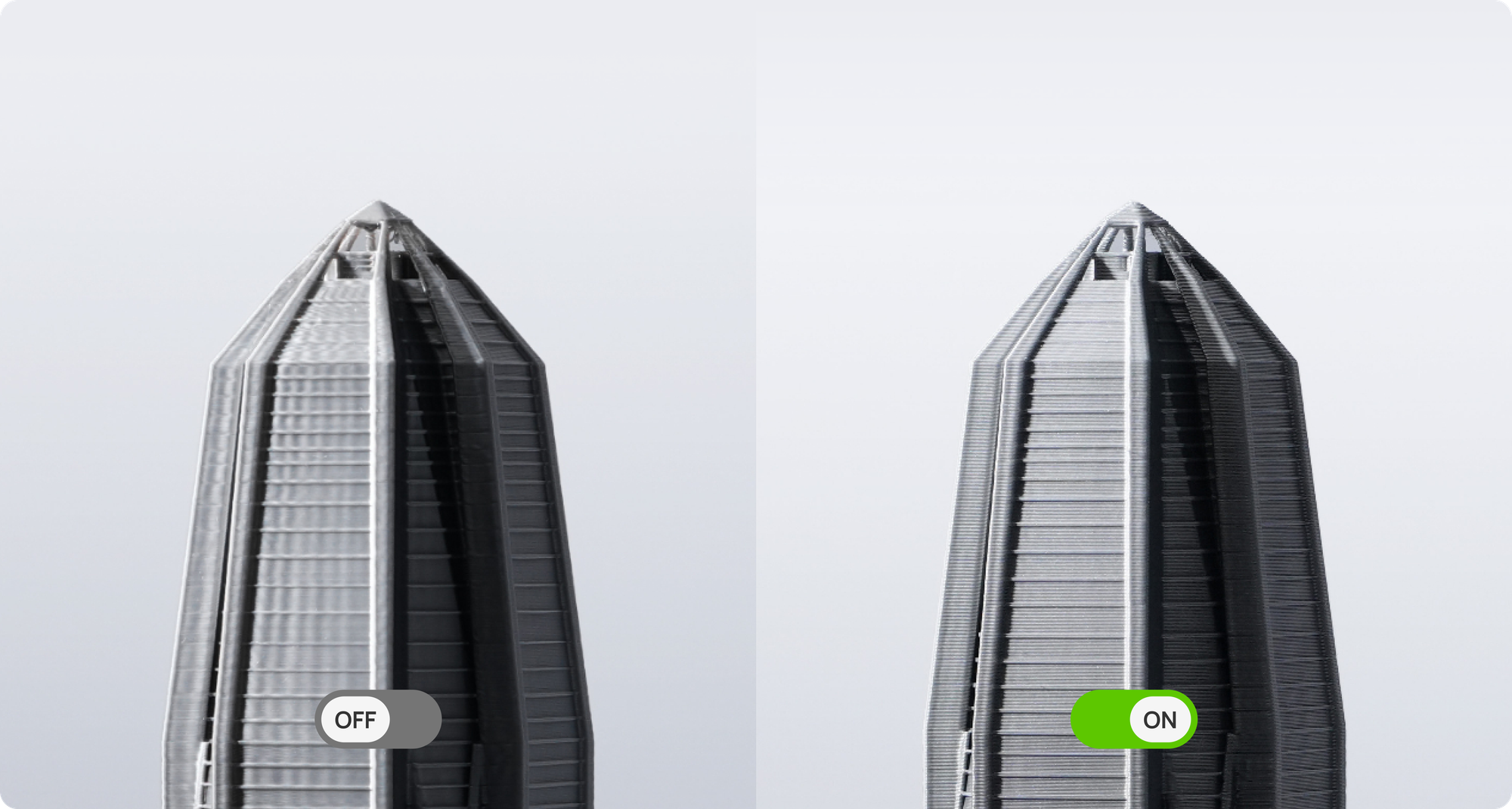
The A2L is a large Cartesian bedslinger, meaning the bed still moves forward and backward during printing. On a small printer, this is usually fine. But when the printer gets bigger and the printed part gets taller, this movement can become more noticeable.
Early reviews already mentioned vibration and tall-print stability as things to watch.
Bambu has added some solutions, including frame support, vibration compensation, and other design changes to reduce the issue. Based on the early reviews, the print quality still looks very impressive.
But physics is still physics. If you print a tall, slim part, and the bed is moving back and forth, the printed object itself can still wobble. A CoreXY printer naturally has an advantage here because the printed part stays still.
So I don’t think this is a dealbreaker. But it is something buyers should understand.
A2L may be a very good large bedslinger. But it is still a large bedslinger.
Multicolor Is Still The Old Bambu Style
Another thing that may disappoint some people is the multicolor system.
The A2L still uses a single nozzle. That means when the printer changes color, it needs to purge the old filament before printing the new one. This system works. Bambu has already made it very user-friendly. But it is not the most efficient way to do multicolor printing.
Some early reviews suggest the A2L may be slightly faster or slightly more efficient than the A1 when changing colors. That is nice. But it is still not the same level of improvement as a toolchanger or multi-toolhead system.
This is probably one reason why the tech community may not be very thrilled.
The market is already moving toward lower-waste multicolor systems. So when Bambu releases a new printer that still relies on the same basic single-nozzle purge system, it feels a bit conservative.
Again, not bad. Just not very exciting.
The Cutting Module Actually Makes More Sense Here
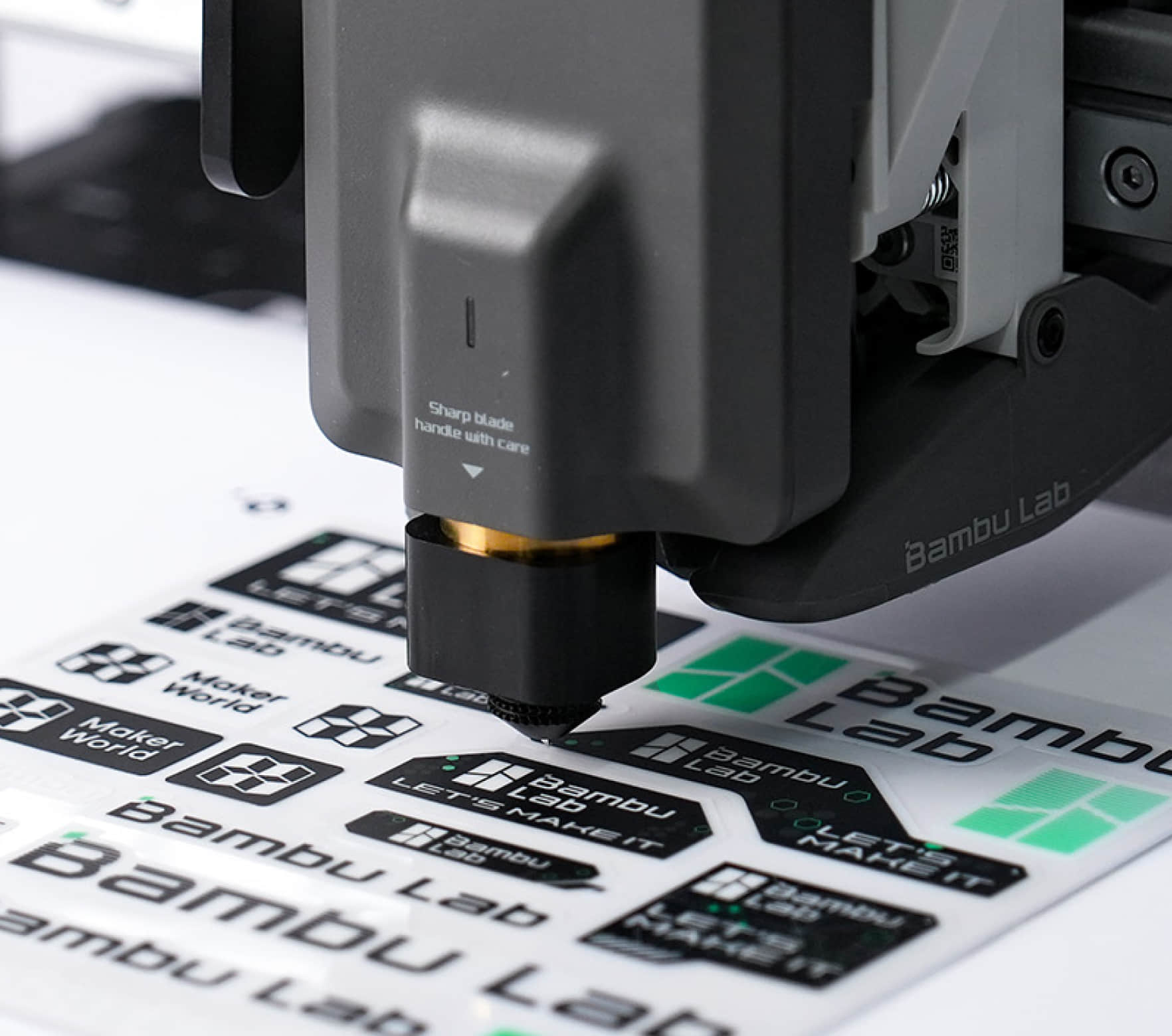
One part that I find interesting is the cutting and plotting support.
On the more expensive H-series, using a high-end 3D printer as a cutter or plotter can feel a bit like a gimmick. But on the A2L, I think it makes more sense.
The printer is larger, more affordable, and aimed more toward creative users. So if someone wants to print cosplay props and then cut decals or vinyl stickers using the same machine, that is actually useful.
This also matches the “Creative Playground. Extra Large.” marketing direction.
So while the A2L may not be a big innovation in 3D printing itself, this creative-tool angle could make the machine more attractive to casual makers.
Who I Think This Printer Is For
I think the A2L is probably for people who already like the A1 idea, but want more space.
If you mostly print PLA, PETG, and TPU, this printer makes sense. If you print cosplay parts, props, large toys, home items, display pieces, or simple functional prints, this printer also makes sense.
But if you want to print engineering materials like ABS, ASA, nylon, or carbon-filled materials seriously, this is probably not the right machine. It is open-frame, the bed temperature is limited, and it is not designed to replace an enclosed CoreXY printer.
If your main goal is efficient multicolor printing with minimal waste, this is also probably not the most exciting option.
But if your goal is simply to get a large, easy-to-use Bambu printer at a lower price than the H-series, then the A2L is probably going to be very attractive.
My Early Take
My current feeling is simple. The A2L does not look like Bambu Lab trying to shock the industry with a new technology. It looks more like Bambu Lab making a very calculated product to cover a market gap.
Maybe it is still too early to tell, but perhaps that could be enough. Many hobbyists do not care whether the printer is innovative or not. They care whether it prints well, is easy to use, and gives them enough build volume for their projects. From that perspective, I think many users will be very happy with the A2L.
But for the tech community, the reaction may be different. Some people expected a more serious second-generation A-series printer. Maybe better multicolor. Maybe a new AMS Lite. Maybe a more advanced motion system. Maybe something that feels more like a true “A2.”
Instead, what we got looks like a bigger, refined A1. That is not a bad product, but it may not be the most exciting product either.
So for now, my early conclusion is this:
The Bambu Lab A2L looks like a smart business move, not a major innovation move. But smart business moves can still become very successful products.
I will test it myself once the unit arrives and see whether the actual experience changes my opinion.
Don’t miss the latest articles and guides
Get new Domechy articles, guides and free models straight to your inbox.

Wanna share your thoughts or request anything? Comment below.